

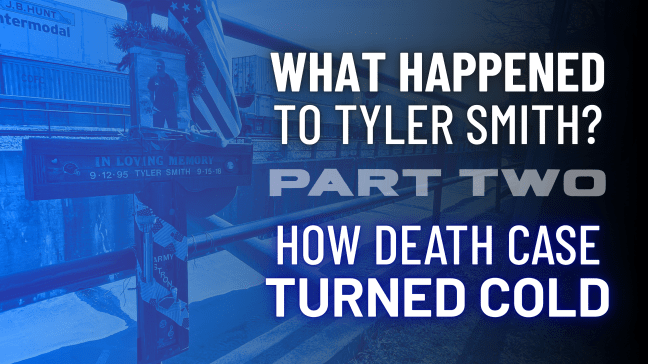
GALESBURG, Ill. – New details shed light on how the Galesburg Police Department let a potential homicide case in 2018 turn cold and remain unsolved 7 years later.
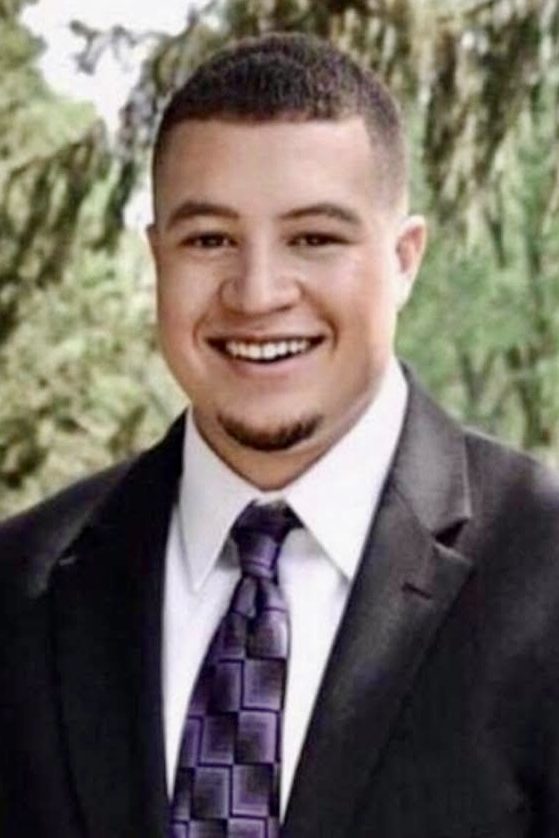
Tyler Smith, 23, was reported missing in Galesburg the morning of Sep. 15, 2018, after not showing up at his friend’s house the night prior, following an evening of drinking at nearby bars.
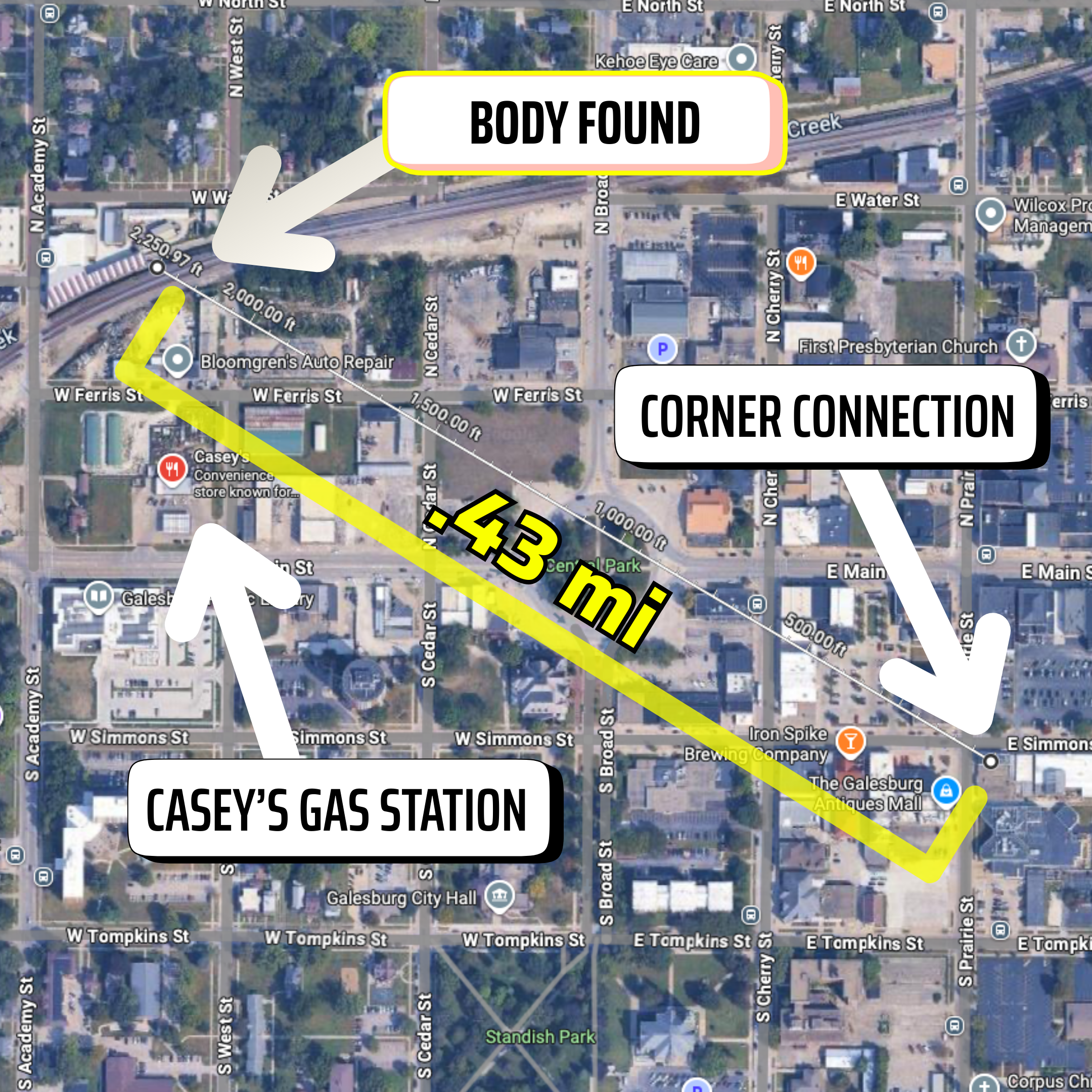
Later that day, a passerby discovered Tyler’s body less than a half-mile from where he was last seen with friends.
Investigators with the Galesburg Police Department quickly ruled Tyler’s death an accidental drowning due to him being face down in water, police reports show.
The first autopsy was performed alone by Dr. Amanda Youmans in Peoria the following day, affirming the original assessment by Galesburg investigators: Drowning.
Nearly two years later, in July 2020, Tyler’s body was exhumed for a second autopsy after persistent requests from his family and other officials who shared serious doubt regarding the accuracy and thoroughness of the autopsy as well as the handling of the investigation by Galesburg Police.
The second autopsy, this time accompanied by Coroner Mark Thomas, county and state investigators, and retired Cook County detective Mitchell Drake, revealed injuries not noted in the original autopsy report, including a new cause of death.
Illinois State Police opened their own investigation, despite Galesburg Police maintaining there was no foul play.
In September, now-former Knox County Coroner Mark Thomas confirmed to me Tyler’s death certificate has been formally amended to include the new cause of death, in addition to drowning. However, state police investigators want to keep the new autopsy report sealed from the public due to the ongoing investigation.
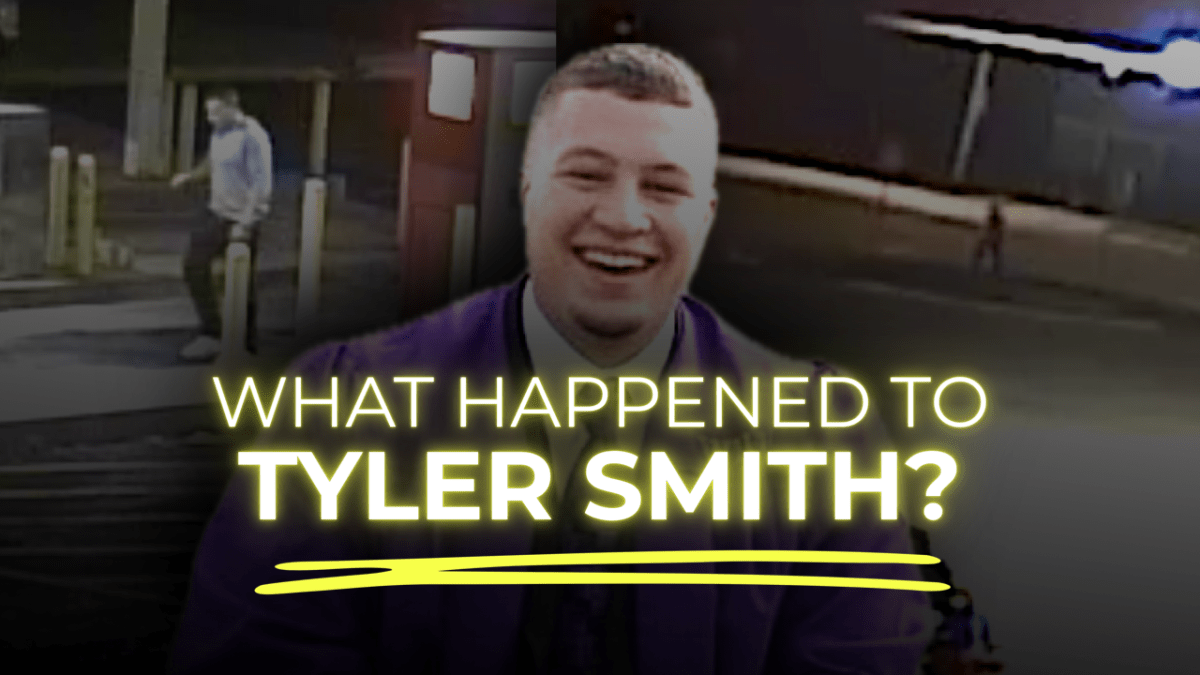
‘What Happened to Tyler Smith?’ Pt. I:

In part one, we covered the sequence of events leading up to Tyler’s death, and what transpired afterward. Now, in part two, we will take a closer look at Galesburg’s handling of the investigation.
The details in this article are based on police and autopsy reports, a second interview with Mitchell Drake, and a lawfully recorded conversation between Tyler’s mother Sandra Halsne and the Galesburg Police Department.



The crime scene.
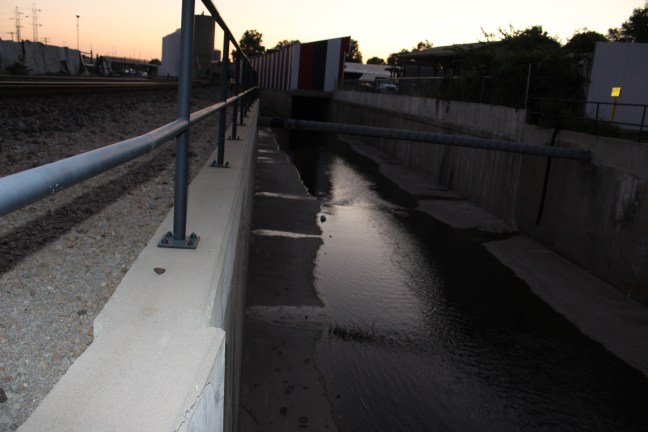
On Sep. 15, 2018, shortly before 7 p.m., a passerby called 911 to report they had discovered a body in the Cedar Creek drainage ditch in Galesburg.
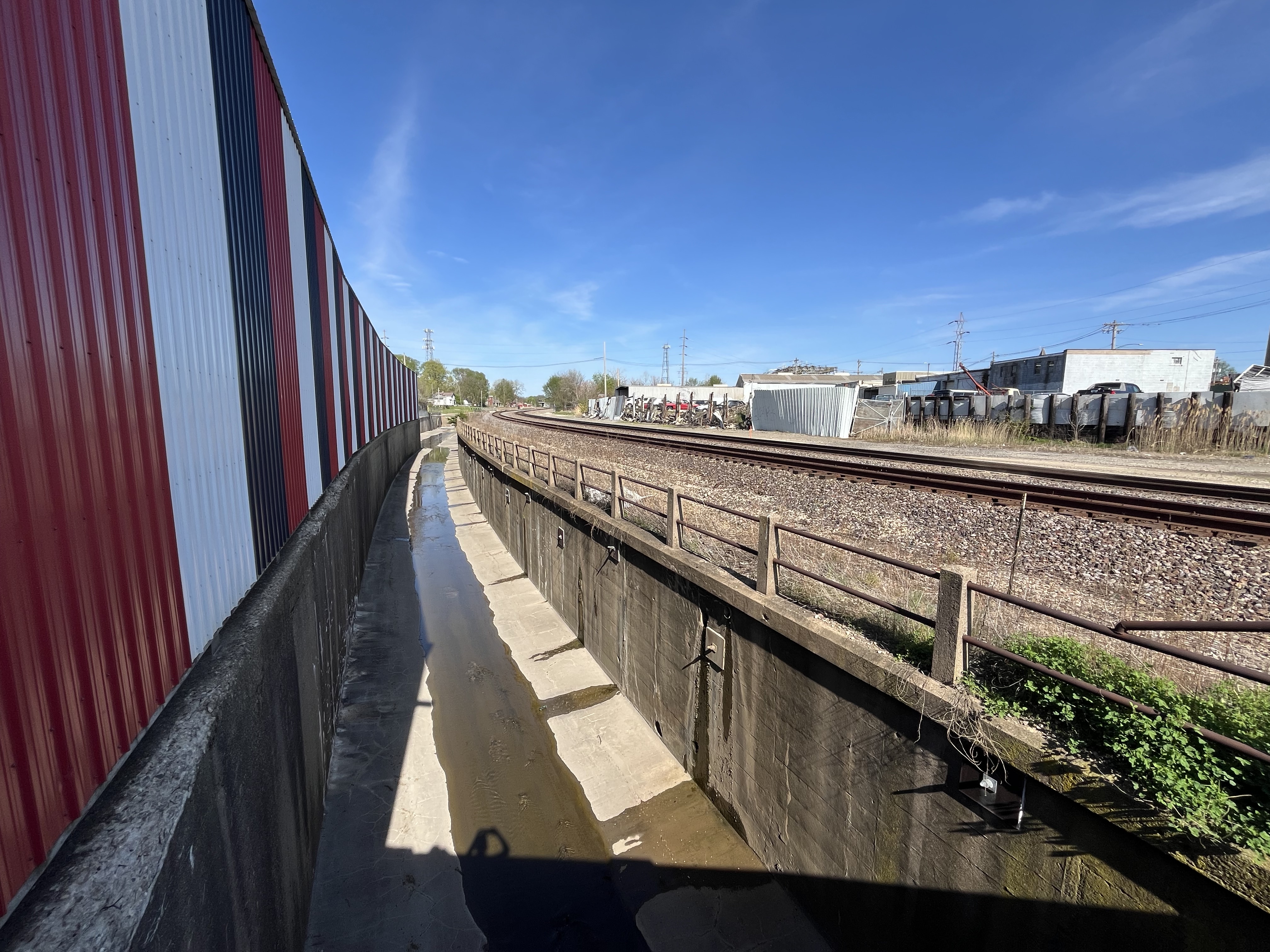
Upon arrival, Galesburg Police Officer Tim Spitzer notes he, ‘observed a clothed person, approximately 75 yards away in the canal, lying down with the head near the water (north) and feet near the retaining wall (south.) The person was not moving.’
Officer Jacob Taylor wrote he had set up a perimeter with yellow tape, and Detective Todd Ollinger processed the scene.
Officer Jason Paulsgrove noted he observed, ‘a small injury to the right side of [Tyler’s] face and a small amount of blood in the water around his face.’
The scene was then turned over to Detective Ollinger and Coroner Mark Thomas.
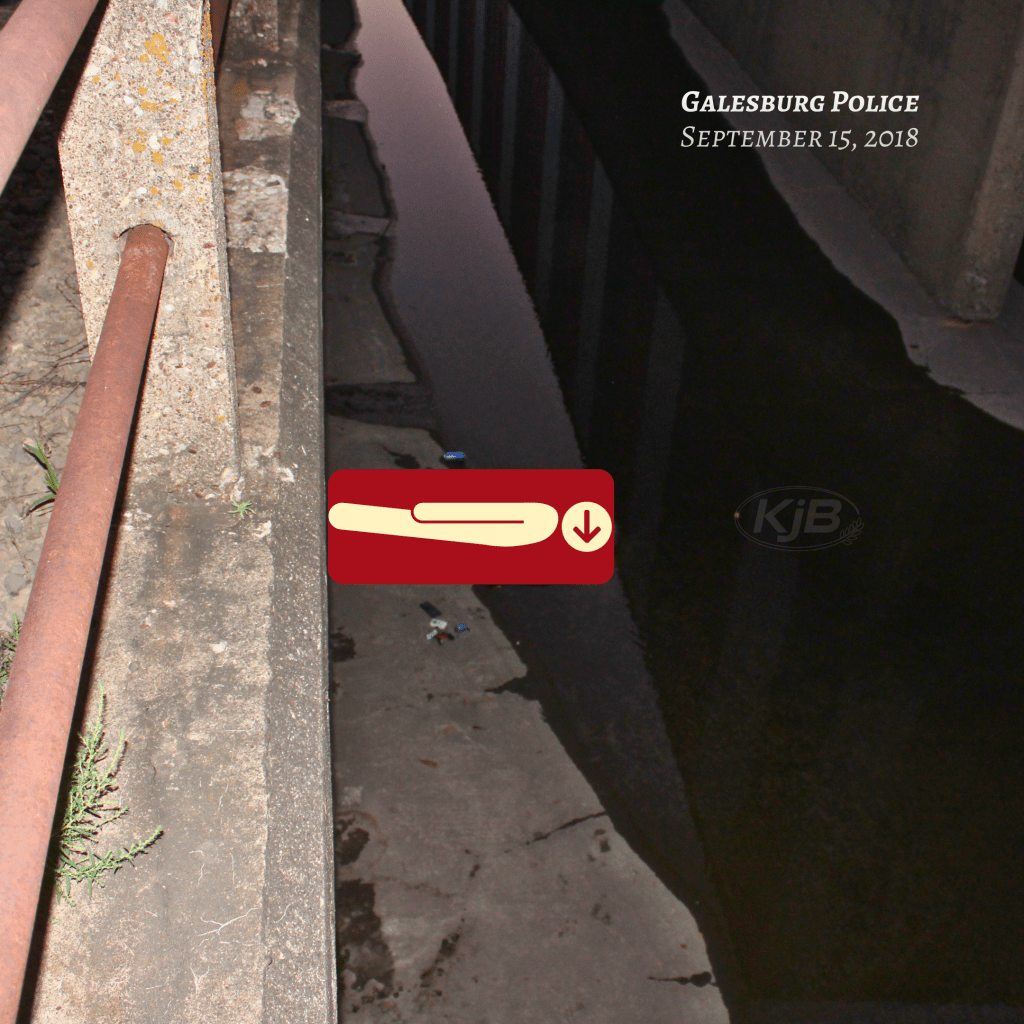
Ollinger noted, ‘the victim was neatly dressed in denim jeans, a hooded sweatshirt, and athletic shoes.’
He added, ‘I observed no obvious signs of trauma or injury and the victim’s clothing, other than being wet from the flowing water, was free of soil and blood like staining. There was a small amount of [blood like substance] present in the water under the victim’s face but it was not known at this time whether or not it was the result of injury and/or decomposition.’
Ollinger states he collected the following items from the crime scene: a watch with a broken band, a vaping pen, a can of Camel brand Snus containing pills, the victim’s wallet and California driver’s license, $72 in cash, one cell phone, two sets of keys, an empty can of Keystone Light beer, an iron railroad spike, a plastic grocery bag with empty cans and packaging for Keystone Light beer, and a black leather purse containing a bottle of lotion.
Ollinger and Thomas then removed Tyler’s body from the shallow water and placed him on the dry bank before bagging his hands with paper bags secured by zip ties.
The two examined Tyler’s back and torso but reported they found no evidence of trauma or injury. However, they did write that there were signs of, ‘facial injury of an unknown origin,’ and a blood like substance on his face which, ‘appeared to be coming from his nose and/or mouth.’
After Tyler’s body was removed from the scene, his personal belongings and cash were returned to his parents, but chose to keep his cell phone ‘until further notice.’
On Sep. 19, after the preliminary autopsy listed Tyler’s cause of death as drowning, the remaining items were either thrown away or given to Tyler’s parents.
Over the course of the following days and weeks, investigators spoke with Tyler’s friends over the phone, but did not find there to be anything unusual nor suspicious, so they were not brought in for questioning.
On Sep. 24, a search warrant was obtained for security footage from a Wells Fargo ATM after a receipt had showed Tyler withdrew money from it. However, upon review of the available video, Ollinger noted, ‘it did not capture Tyler using the ATM.’




Confronting police.
On Nov. 12, Tyler’s parents, Sandra and Keith, met with Galesburg Police to express they were concerned about the course and outcome of the current investigation.
In particular, Sandra questioned officers as to how they were unable to find Tyler on the ATM footage when there was a receipt he withdrew money from it the night he died.
In an attempt to calm their tension, the officers offered to watch the ATM footage together with Sandra and Keith to confirm Tyler was not captured on camera.
But, sure enough, Tyler appeared on camera withdrawing cash from the ATM.
The officers blamed computer glitches, but this was not enough for Sandra and she requested all documents in connection to the investigation, including police and autopsy reports, and crime scene photos.
On Nov. 30, after reviewing the reports, Tyler’s parents returned to Galesburg to address more concerns they had about the investigation, and file a formal complaint.
Permission was granted to Sandra to record audio of this conversation.
Officer Paul Vannaken says, “I don’t know if I’ll ever be able to tell you why or how Tyler ended up in that creek.” Adding, “There’s no evidence of any criminal act. I reviewed it with the State’s Attorney’s Office.”
Sandra asks if police had interviewed the bartenders at the venue was last seen by friends, but the officer said no.
Then she asks if the investigation is still ongoing and if so, what is being done.
“It’s an open case,” Vannaken says. “If somebody comes forward with additional information that we can follow up on, this case will remain open forever.”
They then discuss whether or not cameras in the area had been checked, particularly the cameras at Monkey Business, since it is located between Corner Connection, the last bar Tyler was at the night he died, and where Tyler’s body was found, but the officer said the business did not have any cameras.
“I called them, they have two,” Sandra replied. Adding, “They said they have cameras inside and outside.”
“We’re not aware of that,” the officer said.
As for the building located just shy of 500 feet from where Tyler’s body was found, Tyler’s parents claimed to have been told the cameras on the building had been checked, but the officer said the owner never returned their call.
“I mean we just drove by and you can see they have cameras,” Sandra said.

The officer replied, “Again, we have a drowning, and it was told to us it’s an accidental drowning and I have no evidence to show that there was anything else other than that.” Adding, “We have not hid anything from you in this investigation.”
Sandra then asks if they could have a ‘fresh set of eyes’ come into the investigation, including requesting state police.
“I saw the pictures of my son,” Sandra said. “His eye was black and blue. His face was swollen and when I went to the funeral home, they said he needs makeup.”
Furthermore, Sandra added, “There could have been an accident and he could have been put down there…We don’t know. But what little pieces that we could have had, I feel like weren’t done.”
The officer continues to affirm there is no evidence of foul play and that they wouldn’t even be able to obtain search warrants.
“You’re taking a funeral home director’s statement that he’s bad,” the officer said. “Yeah, his face is bad, because it was laying in water for 16 to 18 hours.”
The discussion turns to a back and forth about protocol, how investigations work and how officers had been treating Tyler’s parents up to this point.
“This case frustrates me to no end,” the officer said. “And when I get that way, when I say, what do you want me to do? It’s not because I’m upset with you guys. I’m frustrated because I can’t give you the answers I’m supposed to give you.”
Over the next 10 months, Galesburg Police followed leads provided by Tyler’s parents, up until September 2019 when the police report ends saying, ‘There have been no other leads or information in reference to the death of Tyler Smith.’
Sandra is the one who obtained the Casey’s footage of Tyler walking by the store only minutes before he presumably died.
Around a couple minutes later, a squad car is seen driving through the Casey’s parking lot then onto the road in the direction Tyler was walking, but there is no evidence this officer was involved in Tyler’s death, nor is there any indication she witnessed what happened to him.
What went wrong?
Mitchell Drake spent 35 years in law enforcement before retiring in 2019.
In his career, he served more than two decades working in investigations, nearly a decade on a homicide task force, and was a certified homicide investigator.
Shortly after retiring, in May 2019, Drake says a friend reached out to him to make him aware of the Tyler Smith case.
Initially reluctant, he ultimately committed to investigating Tyler’s case, for free, after meeting with Sandra and Keith.
“They had complete records, all the police reports, video evidence, autopsy reports, complete with pictures,” Drake said.
After combing through the available reports and evidence, it didn’t take long for Drake to grow concerned about the investigation.
“They photographed all that and they took absolutely no measurements whatsoever of where this stuff was located with any fixed points of reference,” Drake said.
From his perspective, it got worse as he sought details about the evidence shown in the crime scene photos.
“Items they had marked in their photographs were not preserved as evidence,” Drake said. “They were merely thrown away.”
But why is it important to preserve Tyler’s clothes or preserve the items found near his body as evidence?
“On an undetermined death, clothes are usually a very good source of DNA, trace evidence, fibers, even footprints,” Drake said. “You can get off of clothes if someone’s been kicked, if someone’s been involved in a struggle, blood trace evidence that the victim fought back, which was something that I surmised happened – he fought back.”
As for measurements, Drake says taking measurements and documenting it allows for investigators to reconstruct the crime scene so people can see it in 3D at any time.
Drake also had concerns about how the cause of death was ruled a drowning.
“It did not look likely to me that a person would have drowned when the water was not into his mouth,” Drake said.
After he grew more and more concerned, Drake decided to reach out to Galesburg Police Chief Russell Idle to meet with their investigators, but they refused.
“Idle said that they were not going to meet with us, that it was an accident and the family was not willing to accept it,” Drake revealed. “And they weren’t going to waste any more time on it.”
This made Drake more interested in the case, so he began to interview people living in the area, but it did not yield results, so he turned his focus to the autopsy report and corresponding photos.
Drake told me he extracted the metadata off of the autopsy photos, which showed only 30 to 35 minutes had elapsed from the time the body was removed from the body bag until the final photo was taken prior to the body being placed back into the body bag.
“That jumped out at me immediately,” Drake said. “Because I’ve been to autopsies where the cause of death was extremely obvious…and those autopsies take a couple hours.”
Drake then began to lobby the Knox County Coroner to order a second autopsy, with assistance from a retired Illinois State’s Attorney, and a drowning expert.
Despite dealing with Covid-related delays, the Coroner Mark Thomas ultimately agreed to order the second autopsy.
Drake also contacted Illinois State Police to get involved but they said they still needed to have Galesburg make a formal request.
Then at a Black Lives Matter rally held in Galesburg, Drake says a video showed the Chief of Police telling the crowd that state police had been involved in Tyler’s case ‘every step of the way.’
This was false.
After relaying to state police what the chief had told the crowd, and state police then calling the chief to discuss what was said, the Chief conceded and said state police could takeover the investigation.
Drake says Galesburg should have been canvassing the area, looking for video and formally interviewing people who may have seen Tyler the night he died.
“A patrol officer can walk around and look for video,” Drake said. “It doesn’t take a trained investigator to do that.”
Lessons learned.
“Lack of training is a killer for police departments…but a combination of arrogance and ignorance is the worst thing in the world for a police officer to have.”
Drake provided some lessons other departments can learn from Galesburg’s handling of Tyler’s case.
“Do not lie to the victims,” Drake said. “You tell them everything that you can without compromising the investigation.”
When in doubt, ask for help.
“ISP would have come in at a heartbeat if they’d asked for help from the beginning,” Drake said. “And they would have had a top-notch evidence team come in there.”
Drake said Illinois State Police has the best evidence team in the state, and that they have some of the best investigators.
“They actually had an office right there in Galesburg that they could have drawn from for the evidence team,” Drake said. “And they didn’t do it. So, there’s not a lot of excuses there for the department.”
In conclusion, Drake believes Galesburg Police failed Tyler and his family.
“It was a very poor investigation,” Drake said. “The leadership on down stuck with the snap judgment (death was accident) and it was a piss-poor snap judgment.”
SHARE THIS STORY IN YOUR COMMUNITY.
Please consider giving a donation to help make this work possible.
Make a one-time donation
Make a monthly donation
Make a yearly donation
Choose an amount
Or enter a custom amount
Your support is appreciated.
Your contribution is appreciated.
Your contribution is appreciated.

Discover more from KJB REPORTS
Subscribe to get the latest posts sent to your email.
