

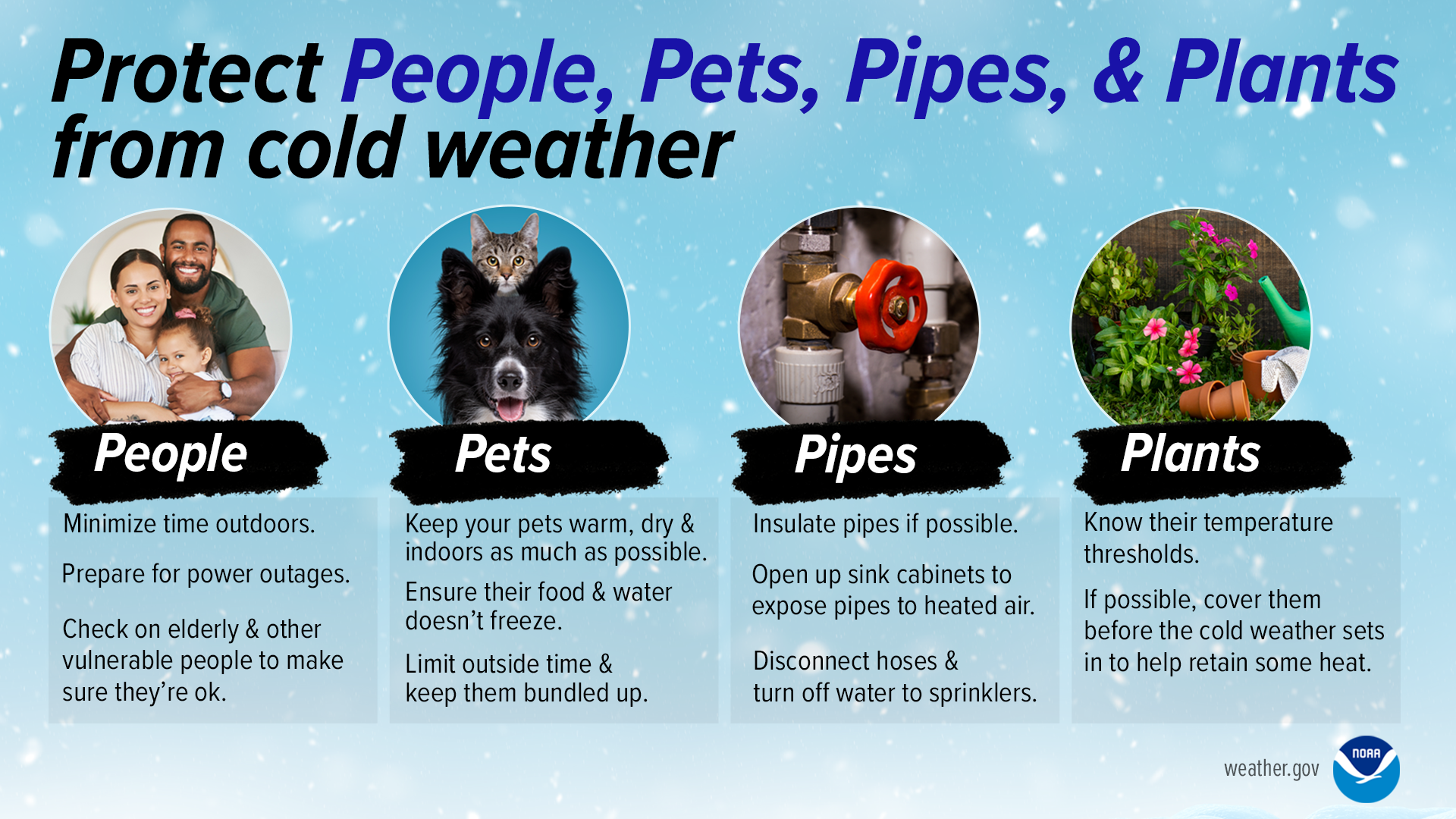
PEOPLE
1) Minimize time outdoors.
2) Prepare for power outages.
3) Routinely check on the elderly and other vulnerable people.
PETS
1) Keep your pets warm, dry and indoors as much as possible. 2) Ensure their food supply & water doesn’t freeze.
PIPES
1) Insulate pipes if possible.
2) Open sink cabinets to expose pipes.
3) Disconnect hoses & turn off water to outdoor sprinkler systems.
PLANTS
1) Know their temperature thresholds. 2) If possible, cover them before cold weather sets in to help retain heat.
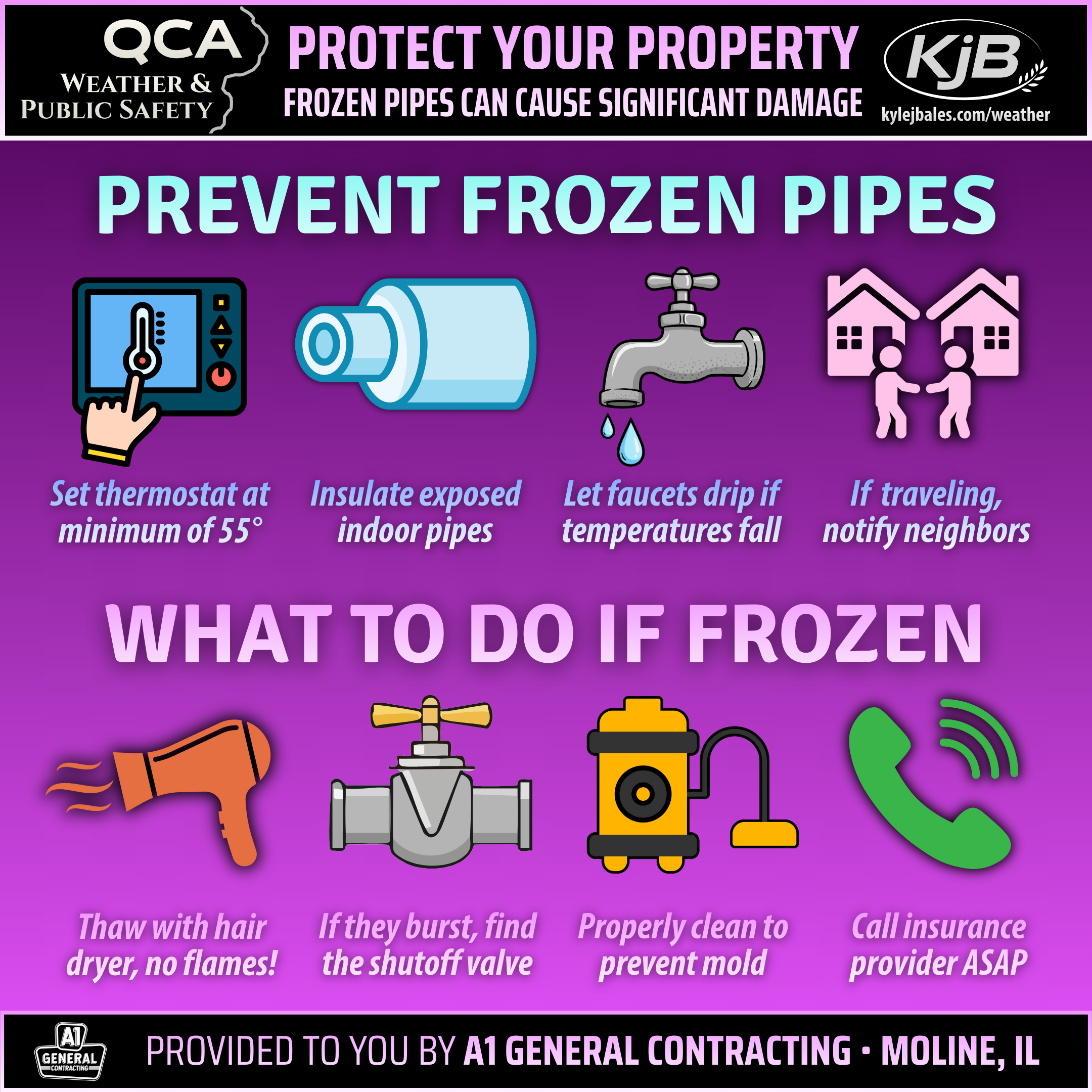
👉 Set thermostat to 55° minimum
👉 Insulate any exposed indoor pipes
👉 Let faucets drip if indoor temp falls
👉 If traveling, notify your neighbors!
⚠️ WHAT TO DO IF PIPES FREEZE
👉 Thaw with hair dryer, no flames!
👉 If they burst, find the shut off valve!
👉 Properly clean to prevent mold growth.
👉 Call your insurance provider ASAP!
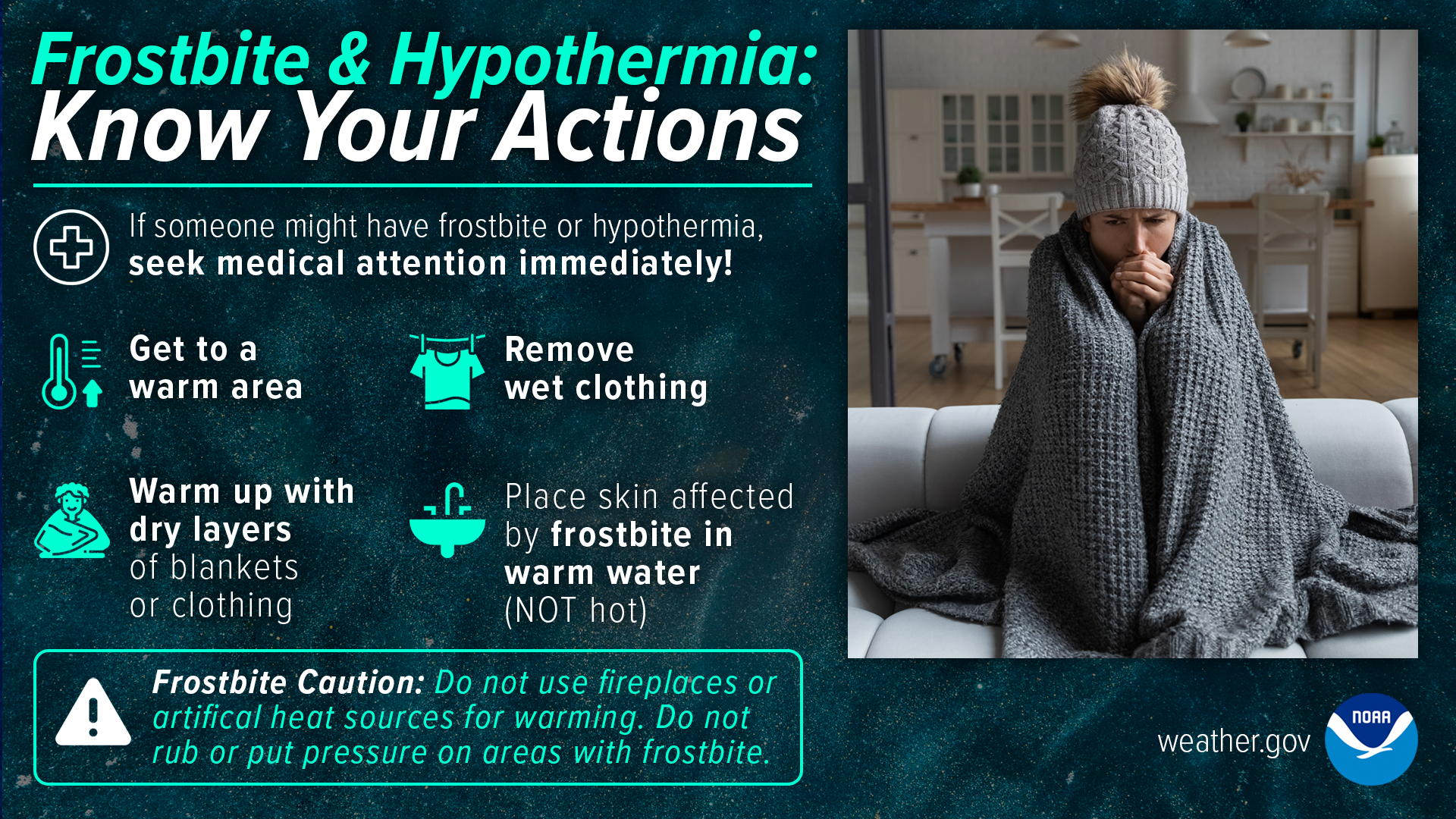
Get to a warm area. Remove wet clothing. Warm up with dry layers of blankets or clothing. Place skin affected by frostbite in warm water (not hot).
CAUTION: Do NOT use fireplaces or artificial heat sources for warming – and do NOT rub or put pressure on areas with frostbite.
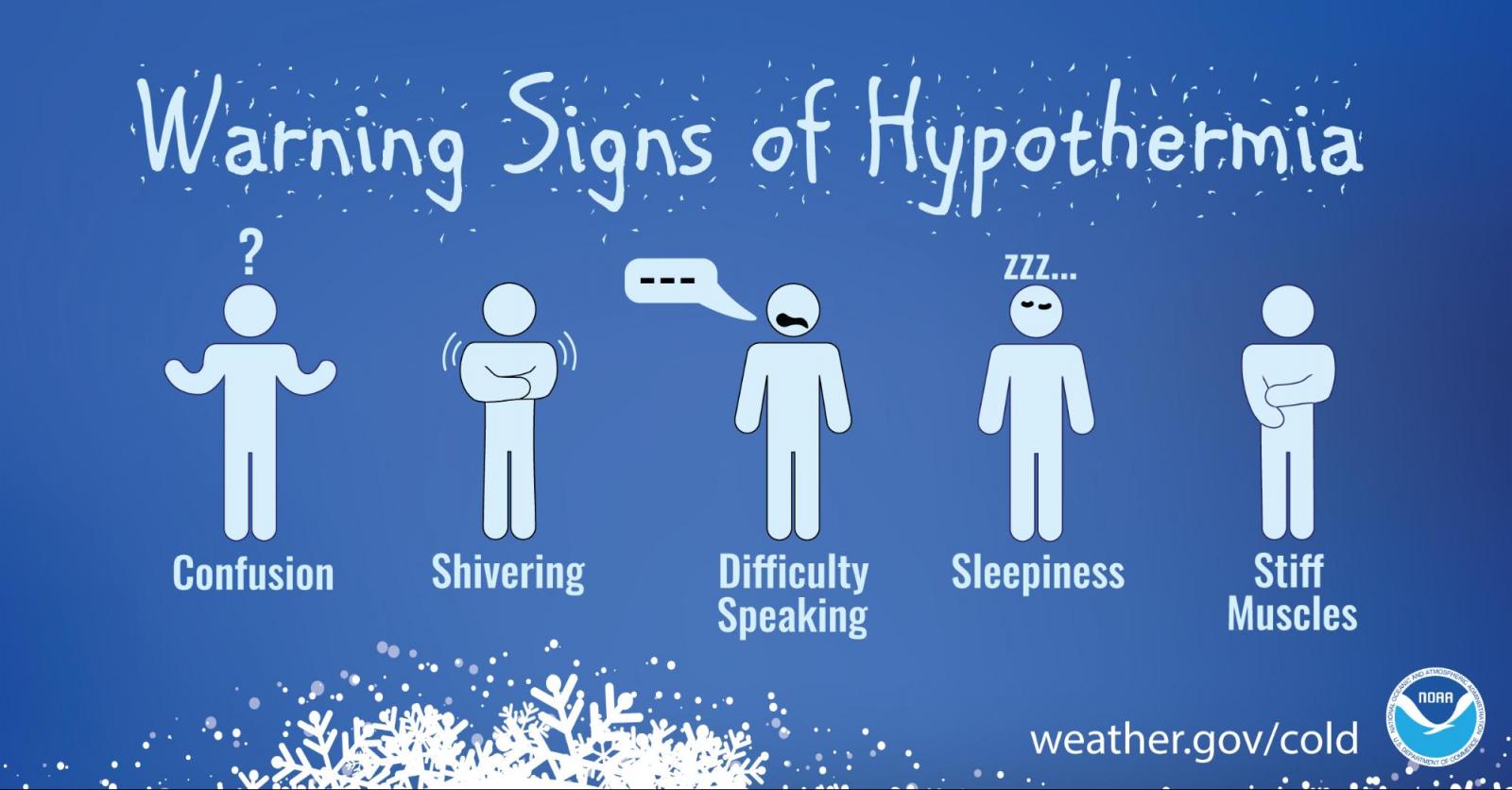
Warning signs of hypothermia include:
• CONFUSION + SHIVERING
• DIFFICULTY SPEAKING
• SLEEPINESS + STIFF MUSCLES
What is Wind Chill?
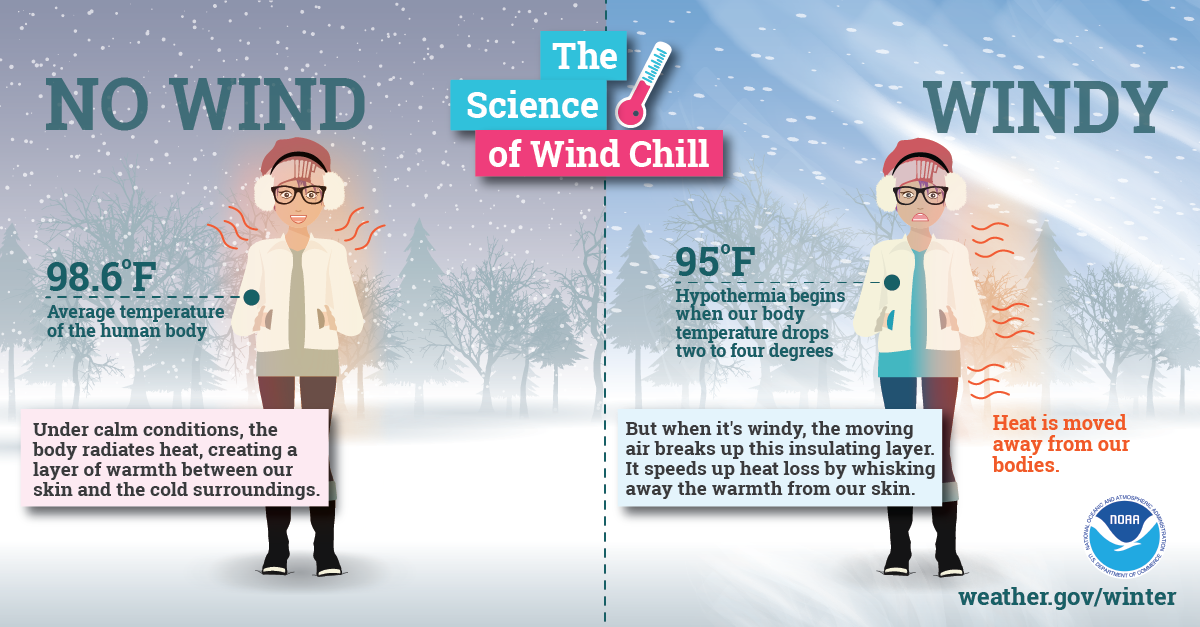
When it’s windy, the moving air breaks up this insulating layer. It speeds up heat loss by whisking away the warmth from our skin.
Hypothermia begins when our body temperature drops two to four degrees.
Click here for current temperatures, wind speed and wind chill.
WHAT IS FROSTBITE?
Frostbite occurs when your body tissue freezes. The most susceptible parts of the body are fingers, toes, ear lobes, and the tip of the nose. Symptoms include a loss of feeling in the extremity and a white or pale appearance.
WHAT IS HYPOTHERMIA?
Hypothermia occurs when your body temperature falls below 95°F.
Warning signs include uncontrollable shivering, memory loss, disorientation, incoherence, slurred speech, drowsiness and exhaustion.
About 20% of cold related deaths occur in the home. Young children under the age of two and the elderly are most susceptible to hypothermia.
LINKS TO MORE COLD SAFETY TIPS
National Weather Service
American Red Cross
